
What 20 Years of Partnership Has Taught Me About Renewal
Spring Makes Us Think We Need a Fresh Start
Spring has a way of making us feel like we should do something. Clean something out. Start something new. Shake off whatever has felt heavy or stale and suddenly become the most refreshed version of ourselves, as if a warmer day and a few budding trees should be enough to change an entire life.
But renewal, at least the kind that lasts, doesn’t happen in a flash of inspiration. It happens when you sit with what’s in front of you and decide it’s worth recommitting to. And if you want to keep with the spring metaphor, renewal is less like clearing the entire field and more like walking it slowly, noticing where the soil needs care.
At this stage of my life, renewal feels much more like a return than a restart. It feels like coming back to what matters, looking at it honestly, and choosing it again with intention.
Looking Back While Looking Forward
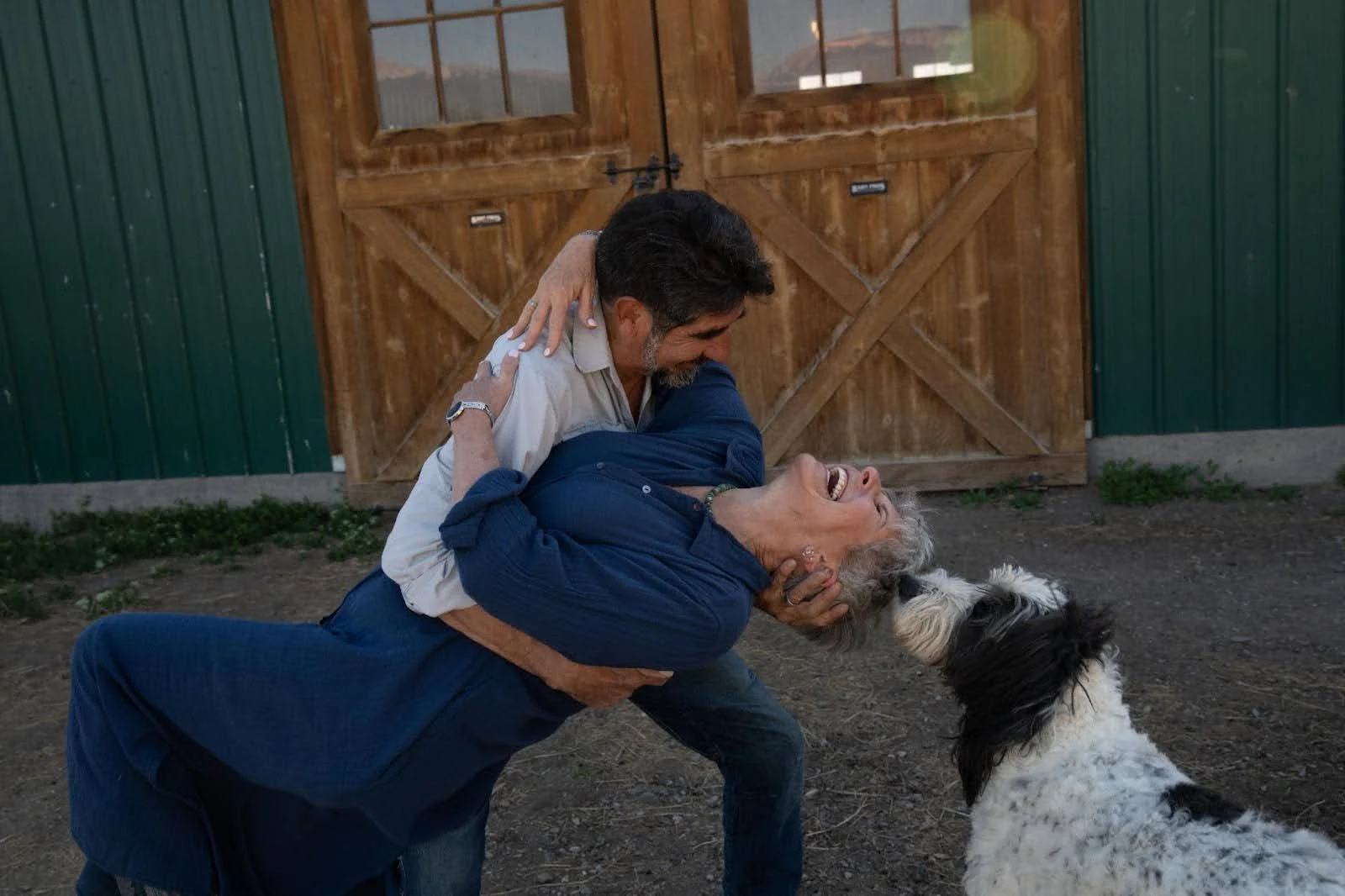
Matthew and I have a tradition of renewing our partnership EVERY YEAR, and this year that renewal carried a little extra weight because it marked twenty years together. We’re not the same people we were when we started, and that’s the point. We’ve changed, we’ve grown, we’ve learned things the hard way, and we’ve built a life that has required real commitment, not just good intentions. So when I said, “We have a lot to look back on and a lot to look forward to,” I wasn’t trying to be poetic. I meant it in the most practical sense.
Looking back means honoring what we’ve lived through and what we’ve built, not romanticizing it and not glossing over it, but actually acknowledging it. Looking forward means allowing ourselves to keep evolving without acting like growth requires blowing everything up. Holding both directions at once is what makes renewal so powerful, because it asks you to stay rooted in reality while still being open to what’s possible.
Renewal Is Different from Starting Over
That’s also why renewal is different from starting over.
Starting over is often fueled by frustration, or restlessness, or the belief that the only way to feel alive again is to get a clean slate. Renewal is fueled by responsibility and clarity. It’s what happens when you decide that what you’ve built is worth tending, and that you’re willing to be intentional instead of passive.
Anything less than a conscious commitment to the important is an unconscious commitment to the unimportant.
I’ve come back to that idea again and again, because it’s true in every area of life, but it may be most visible in our closest partnerships. The gradual disconnect doesn’t usually happen because something terrible occurs. It happens because life gets busy, and you stop paying attention to the things that made the relationship strong in the first place. You can love each other deeply and still lose alignment, and once alignment is gone, you can find yourself sharing a life while quietly living in different directions.
Protecting Alignment Before There’s a Crisis
One of the things I’ve learned about long-term partnerships is that the strength of the relationship isn’t what keeps it strong. The choice to keep renewing it does. Renewal protects alignment. It creates space for truth before truth becomes resentment. It gives you a way to check in with each other before life forces the conversation in a crisis.
And I think that’s why so many people wait. It’s easier to avoid the deeper questions when nothing is technically “wrong.” It’s easy to assume that if there isn’t a problem, then you don’t need to invest. But crisis is a terrible time to build habits that should have been built earlier, and conflict is an exhausting place to discover that you haven’t been honest about what you actually need.
What becomes possible when two people choose alignment before there is a crisis, is not just stability—it’s depth. It’s the ability to grow without threatening the relationship. It’s the kind of trust that allows both people to evolve, because neither person is carrying the fear that change automatically means separation.
Reinvention Doesn’t Happen in Isolation
This isn’t just something I’ve learned in my own partnership; it’s something I see constantly in my coaching work through Nxt Coaching. Personal reinvention doesn’t happen in a vacuum. When one person feels the pull toward a new chapter and keeps it private for too long, the relationship doesn’t get the chance to grow alongside it. The other person often feels blindsided, not because they don’t want their partner to grow, but because they weren’t part of the conversation. When both people are included early—before plans are made, before decisions are finalized, before the storyline gets cemented—reinvention becomes shared. It becomes a collaboration instead of a disruption.
What Ranch Life Has Taught Me About Growth
Spring gets romanticized as the season of fresh starts, but ranch life has taught me that spring is really a season of tending. In the spring we’re not starting from scratch—we’re walking the property, checking the fences that held through winter, repairing the ones that didn’t, clearing branches that fell in the storms, and paying attention to what the ground is telling us. Some areas are ready for new growth. Others need time, water, or simply to be left alone for a while.
The work isn’t glamorous, but it’s necessary. Things that are cared for tend to thrive, while things that are ignored slowly fall apart.
The same principle shows up in partnership and in life. What you tend improves. What you protect has a chance to grow stronger. And what you leave unattended for too long eventually demands your attention whether you’re ready for it or not.
Defining What Matters Most
Years ago, when Matthew and I were envisioning what it would mean to build a new life on the ranch, we weren’t just building a house. We were building an entirely different way of living, and we had to slow down long enough to define what mattered most before we could make any of the tactical decisions. We made a list of what was important—non-negotiable principles that were bigger than square footage or finishes or floor plans—and those ten concepts became our foundation. They became our Big Why. We used them to choose the right architect, the right builder, and the right decisions along the way, because we weren’t relying on instinct alone. We were relying on clarity. (P.S. You can read more about our Big Why in my book!)
I’ve come to believe that long-term partnership needs a version of that too. Not a rigid set of rules, but a clear understanding of what matters most, because what you don’t define intentionally will eventually be defined for you by default. When people feel stuck or stale in a partnership, they often assume the answer is change—something new, something different, something dramatic. But sometimes what you need is not a new relationship; it’s a renewed commitment to what’s important within the one you’re already in.
Change or Recommitment?
The question I come back to in spring, especially when something feels dull or off, is this: do I need change, or do I need recommitment?
Sometimes you do need change. Sometimes you’re misaligned with your values, depleted by what you’re carrying, or living a life that looks right on paper but doesn’t feel like it belongs to you anymore. But sometimes the issue isn’t misalignment; it’s neglect. It’s that you’ve stopped tending something meaningful, and instead of naming that, you start fantasizing about starting over.
Start with an Honest Question
If your partnership—or your life—feels a little stale this spring, I wouldn’t start with the big move. I would start with the first honest question: what have I stopped tending?
And then I’d take one intentional Nxt step. Create space to look back and look forward together. Not in the middle of a busy week, and not in a rushed conversation between obligations. Find a time where you can reflect on what you’ve built, what you’ve learned, what you’ve survived, and what you still want to grow into. Looking back doesn’t keep you stuck; it strengthens your ability to move forward, because it reminds you of your foundation and helps you choose what’s next from experience rather than restlessness.
Choosing Again
Twenty years in, Matthew and I aren’t interested in starting over. We’re interested in choosing again, because what we’ve built is worth renewing.
And maybe that’s what renewal really is: a decision to stay awake in your own life, to consciously commit to what matters, and to keep growing without pretending you need a blank slate in order to begin.
If you’re in a season of reassessment—whether that’s in your partnership, your work, or your sense of purpose—this is exactly the kind of clarity we create at The Immersion. It’s a pause, a reset, and a chance to get honest about what’s most important to you so you can move forward with intention. Couples are not only welcome at The Immersion, but encouraged.
Ready to grow something good together? Schedule a consultation with me here.
